


Dental treatment for dogs and cats
Dentistry
Good oral health is important for your pet's overall well-being. Dogs and cats can develop and suffer from tartar, inflammation or pain or discomfort in the mouth. Dental issues are also common in rabbits and rodents.
Dierenkliniek Capelle provides dental check-ups, dental cleaning and dental treatment for dogs, cats, rabbits and rodents.
Check-up
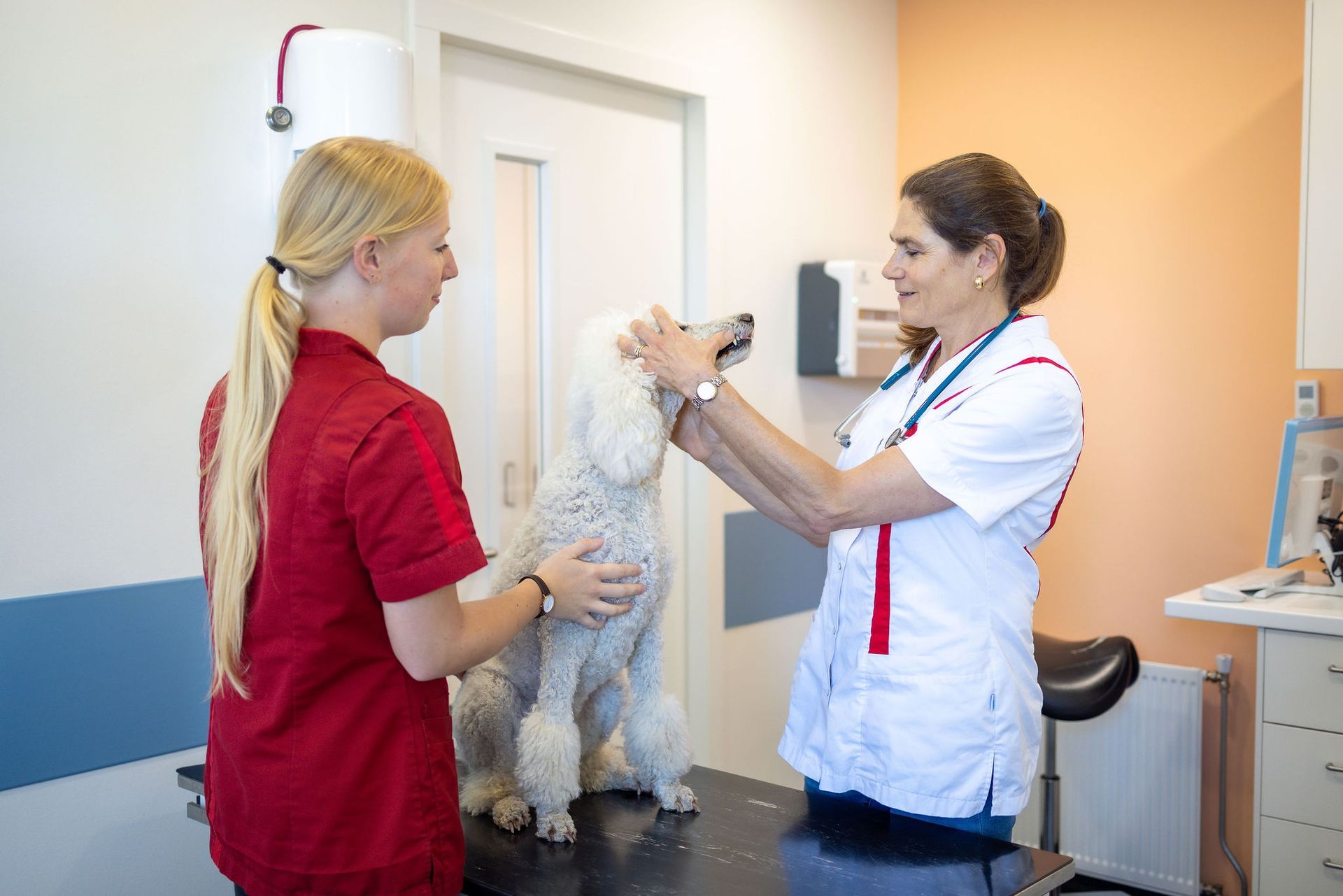
We carefully check your dog's or cat's teeth. This helps us identify tartar, inflammation or other dental problems at an early stage.
X-rays
During a dental check, we take dental X-rays to assess problems below the gumline more accurately.
Treatment
If treatment is needed, we clearly explain what we will do and why. We will also discuss when tooth extraction may be necessary.
Dental problems are not always immediately visible or easy to notice. Your pet may continue eating even when they are experiencing pain or inflammation.
Possible signs include bad breath, drooling, difficulty eating, chewing less than usual, red gums or becoming quieter or more withdrawn.
When is dental care needed?
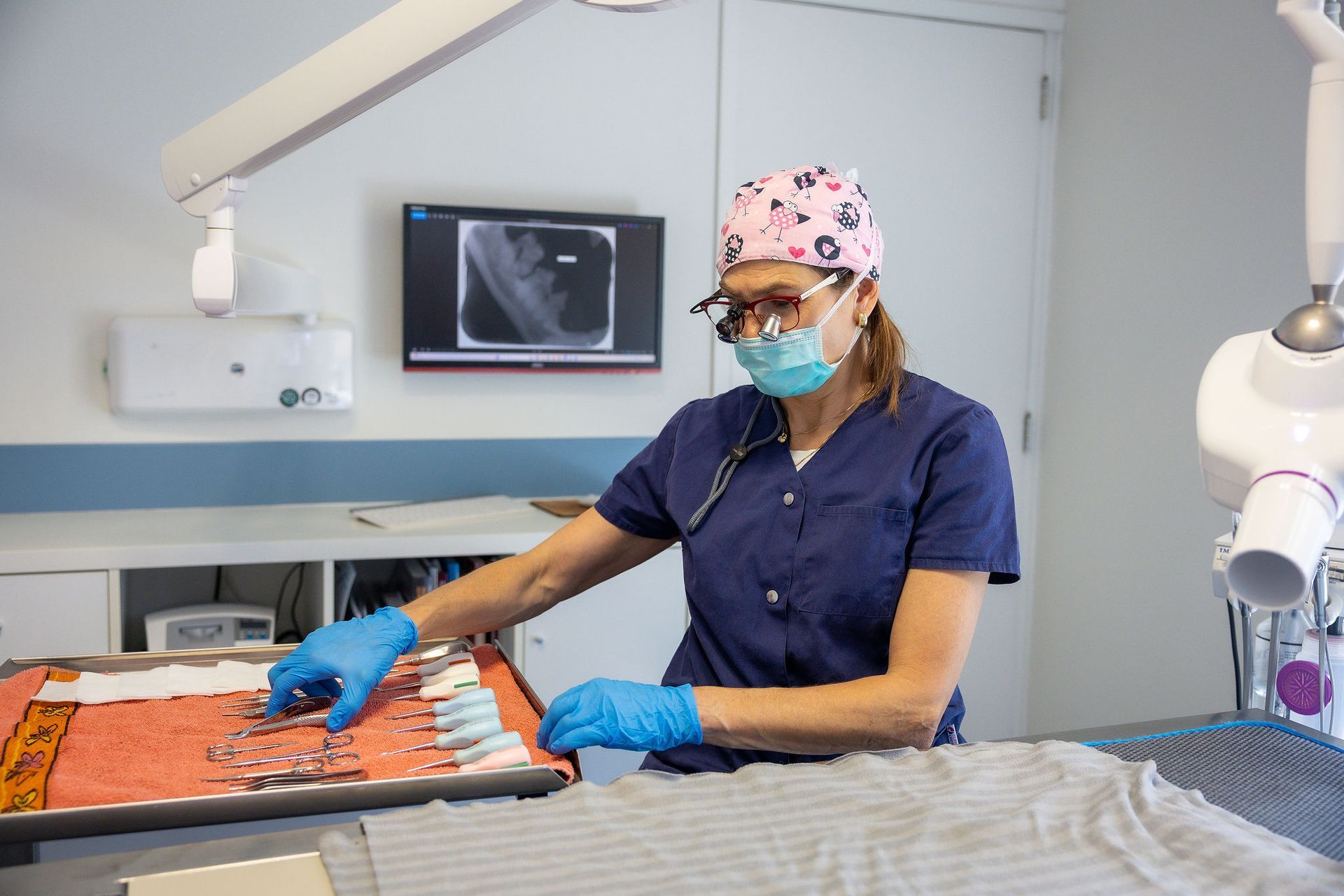
As a veterinary nurse, I work in many different areas of the clinic. From ultrasound and dentistry to the front desk and the operating theatre: I enjoy contributing to the care we provide for your pet.
Natasja van Hillo
Veterinary Nurse
During dental treatment, we thoroughly clean and examine your pet's teeth. We always take dental X-rays to check for problems below the gumline, such as issues with the tooth roots or jawbone.
If a tooth is severely damaged and needs to be removed, we will discuss this with you beforehand.
After the treatment, we explain what we found and how you care for your pet at home. Where possible, we will discuss the expected costs with you in advance.
What happens during dental treatment?
Frequently asked questions
How do I know whether my pet needs dental treatment?
Possible signs include tartar, inflamed gums, bad breath, broken teeth or pain when eating. Not sure whether your pet needs treatment? A veterinary technician will be happy to check your pet’s teeth during a dental check-up and advise you on the next steps.
We recommend having your pet's teeth checked once a year. We also examine the teeth during the annual health check and vaccination appointment.
What happens during a dental cleaning?
During a dental cleaning, we remove tartar and polish the teeth. Your pet receives a general anaesthetic for the procedure. Once they are anaesthetised, we take dental X-rays to assess the teeth and roots below the gumline.
Why do you take dental X-rays?
Many dental problems are located below the gumline and cannot be seen without an X-ray. Dental X-rays allow us to assess the roots and jawbone. We often need six to eight X-ray images to get a complete view of your pet's teeth and jaw.
Which dental procedures do you perform?
As well as cleaning and polishing your pet's teeth, we also extract damaged teeth when necessary. We always explain beforehand what is needed and why.
When is it necessary to extract teeth or molars?
If the X-rays show severe damage to the teeth, roots or jawbone, we recommend extracting the affected teeth. This can prevent pain and further problems. We always discuss this with you before any teeth are removed.
How do you ensure safety during a dental treatment?
We take several steps to keep the procedure as safe as possible. Your pet is intubated, given an IV drip and is connected to a monitor. This allows us to closely monitor their heart rate, breathing, temperature and oxygen levels throughout the procedure.
How can I care of my pet's teeth at home?
Daily brushing helps prevent tartar build-up. Special dental diets and dental chews can also support good oral health. Our veterinary technicians are happy to advise you on the options that are most suitable for your dog or cat.